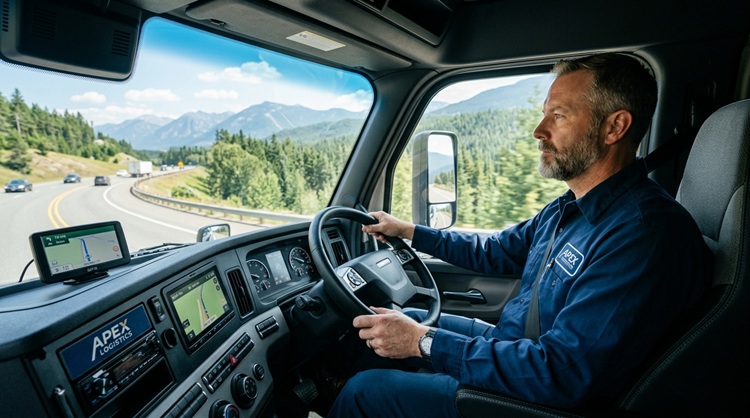
In May of this year, Teamsters Canada, the Canadian Trucking Alliance and the Association du camionnage du Quebec (ACQ) issued a joint statement urging the federal government in Ottawa to address the growing workers crisis in the country’s trucking sector known as Driver, Inc.
Driver, Inc is widely considered a tax loophole in which carriers pressure their drivers to incorporate, convincing them that this independence will allow them to pay lower taxes and avoid payroll deductions. However, these drivers are employees in every other sense of the word, following the carrier’s lead on route choice and driving carrier-owned trucks.
This industry-wide shift into a ‘gig economy’ is eroding hard-won worker protections and costing the federal government over a billion dollars a year in lost tax revenue.
Stephen Laskowski, President of the CTA, says in the statement: “The trucking industry is facing an existential crisis due to a labour abuse and tax avoidance scheme. We need the Canada Revenue Agency and the Labour Program to tackle these issues with the enforcement resources this crisis needs. We need substantial audits on carriers involved in the Driver Inc scam. The laws are already in place, they need to be enforced before it’s too late!”
Industry leaders are urging workers who are operating under Driver, Inc. agreements to seek fair employment with one of Canada’s many honest carriers that are eager to hire them, train them, and pay them fair wages with full benefits. Right now, there are an estimated 57,000 ‘independent contractors’ driving for Canadian fleets, many of whom are new immigrants being exploited by dishonest employers.
One of the carriers that is eager to suppress these exploitative practices and train and hire new drivers is Ontario’s Challenger Motor Freight. Paul Weatherbie, Marketing & Communications Manager of Challenger, has encouraged the provincial government to do everything in its power to close the Driver Inc. loophole.
“These companies are deliberately skipping out on WSIB (Workplace Safety and Insurance Board) payments to the province,” says Weatherbie.
Weatherbie joins the CTA’s call for increased enforcement of existing regulations to curb these abuses. However, he urges industry leaders to take responsibility for policing themselves.
“As an industry, we have to be committed to providing the proper training and protections for our workers,” says Weatherbie. “We shouldn’t rely on the province to shoulder the cost of increased enforcement.”
Challenger’s driver training program, Transportation Training Academy, is rated number one in Canada. This spring, the carrier was named in the Hall of Fame for Best Fleet to Drive at the Truckload Carriers Association’s (TCA) annual conference.
Geoff Topping, Chief People Officer, says the Academy aims to train drivers for the company and the industry at large.
“We want to grow our own quality worker base as well as to help people get their licenses.”
Challenger offers mentorship and training programs, peer-to-peer recognition initiatives, substantial pay raises and retirement programs. They also offer incentives for women to enter the industry, providing free memberships to the Women’s Trucking Federation of Canada.
Laskowki reports that the industry will face a shortage of close to 50,000 drivers in the coming years. That shortfall is largely due to unattractive worker protections and salaries, as well as the unique challenges of long-haul trucking.
“Canada’s truck drivers play a vital role in maintaining the strength of the economy and ensuring the continued supply of food and other goods across the nation,” Weatherbie says. “They deserve Canada’s support and respect.”
By taking the lead in highlighting the inequities and abuses at Driver, Inc., Weatherbie is proving that for drivers seeking secure careers with meaningful protections and a culture of respect, Challenger Motor Freight is a great place to be.